AI writes proposals.
You write the document.
A self-hosted planning workspace. One idea line starts an interview; PRD, feature spec and IA follow — but nothing AI writes becomes the document until you accept it.
Free & open source (AGPLv3) · runs on your Claude Code login, no API key (BYOK fallback) · your machine, your documents
Scope
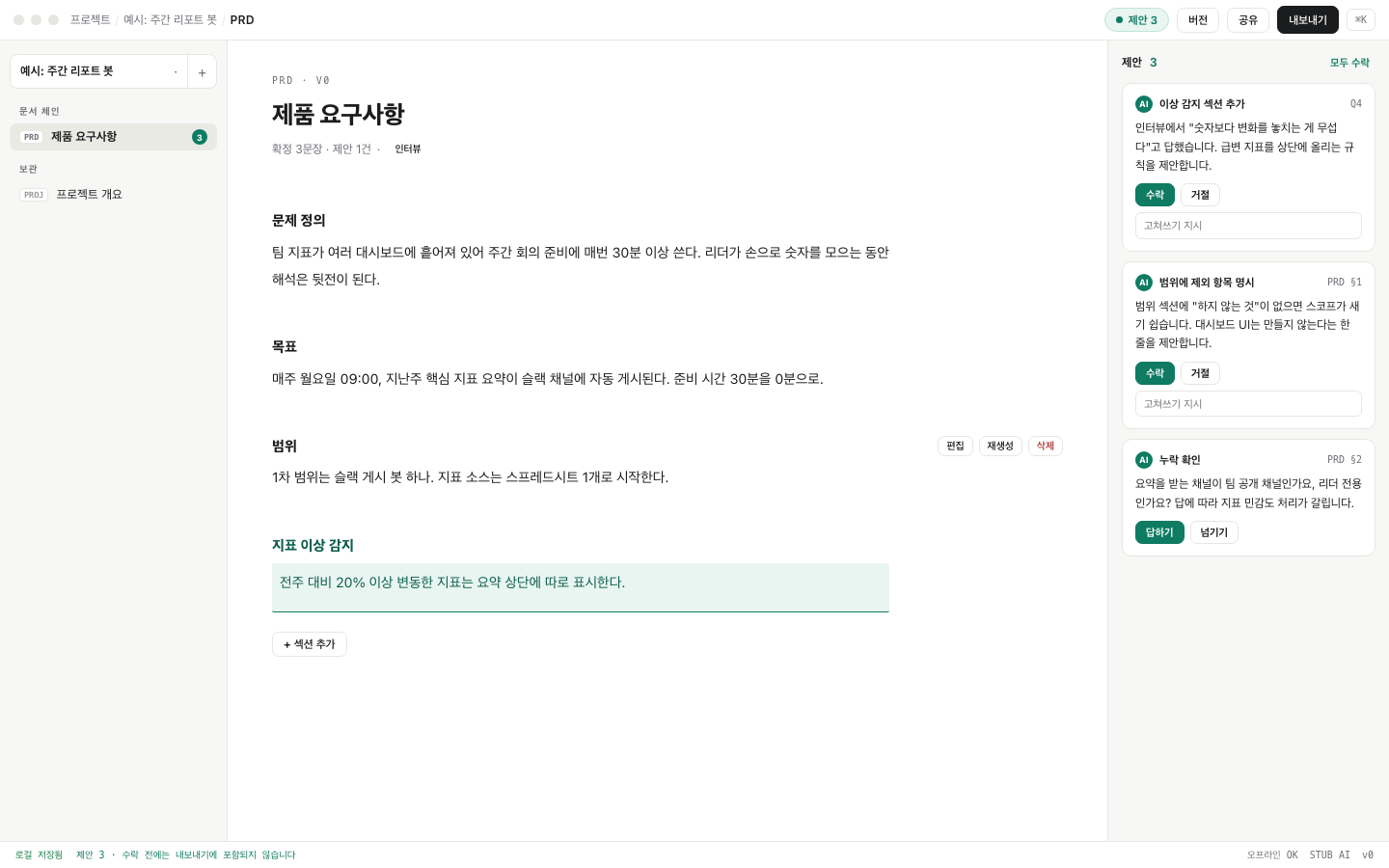
The first release ships one Slack digest bot, reading a single spreadsheet. It does not ship a dashboard UI.
Suggestion mode
One grammar, learned in ten seconds.
If you have ever reviewed suggestions in a shared doc, you already know how to use Drafting. Green means "for your review" — everywhere, and nothing else.
01Everything AI writes is a proposal
Sections stream in as suggestions, highlighted green. There is no AI text that silently becomes your document.
02Only what you accept is the document
Exports and share links contain accepted sentences only. Pending suggestions never leak.
03Every proposal carries its source
Interview answer Q3, PRD §2, or your own rewrite instruction — you always see why the AI is proposing.
04Accept · reject · rewrite
Three ways to handle a card. A rewrite instruction returns as a fresh proposal, never as an edit behind your back.
Document chain
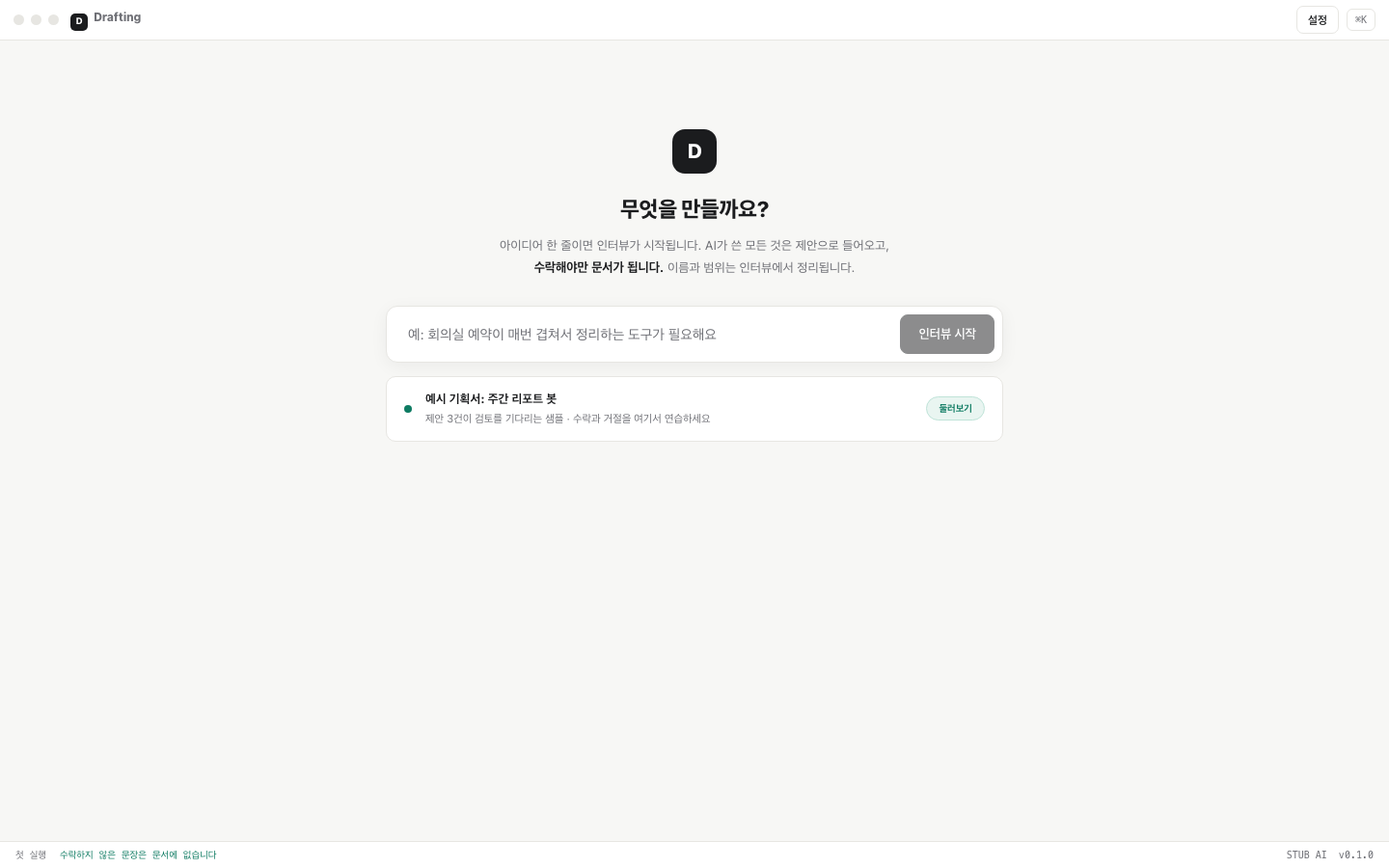
One idea line in. A document chain out.
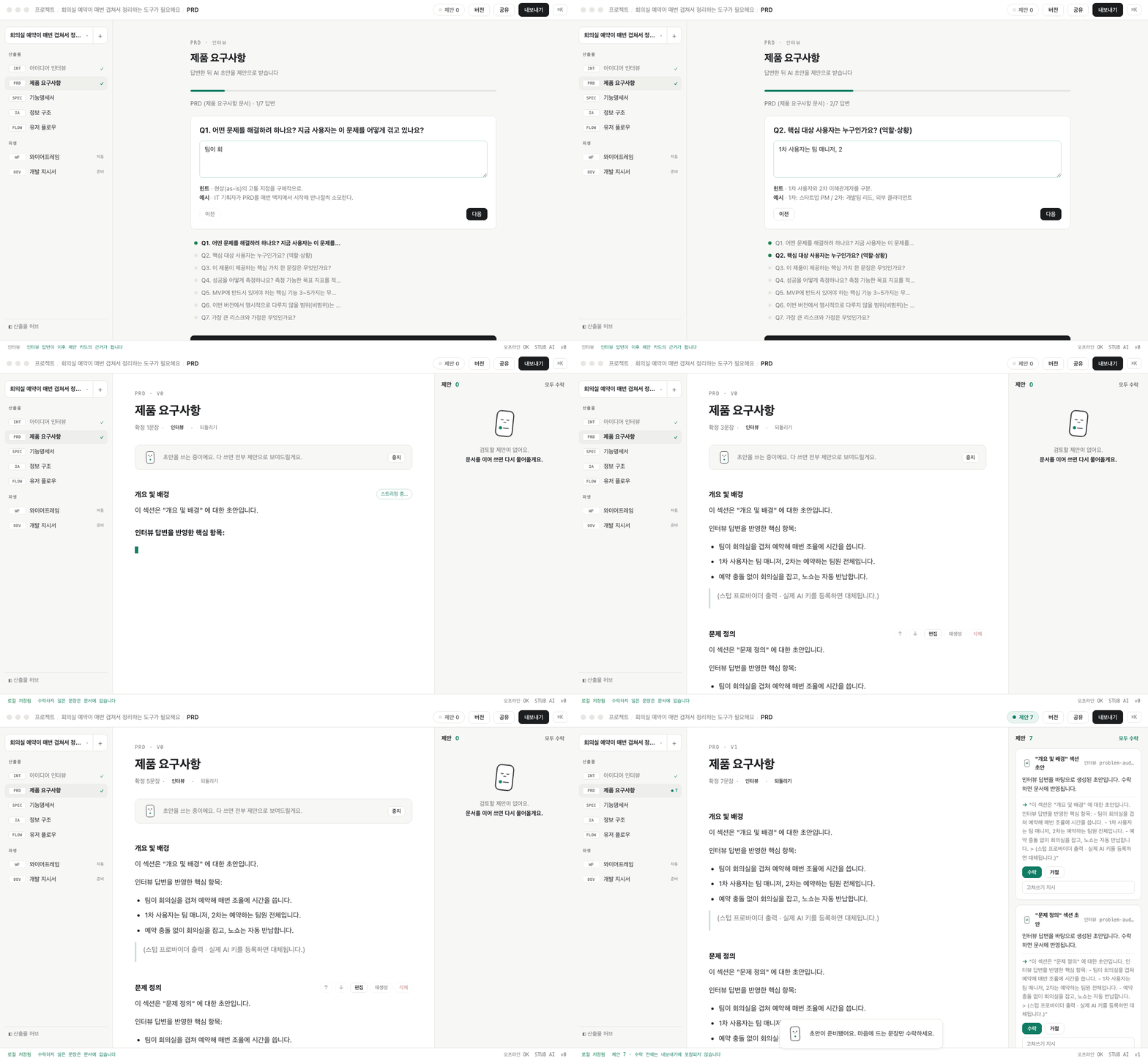
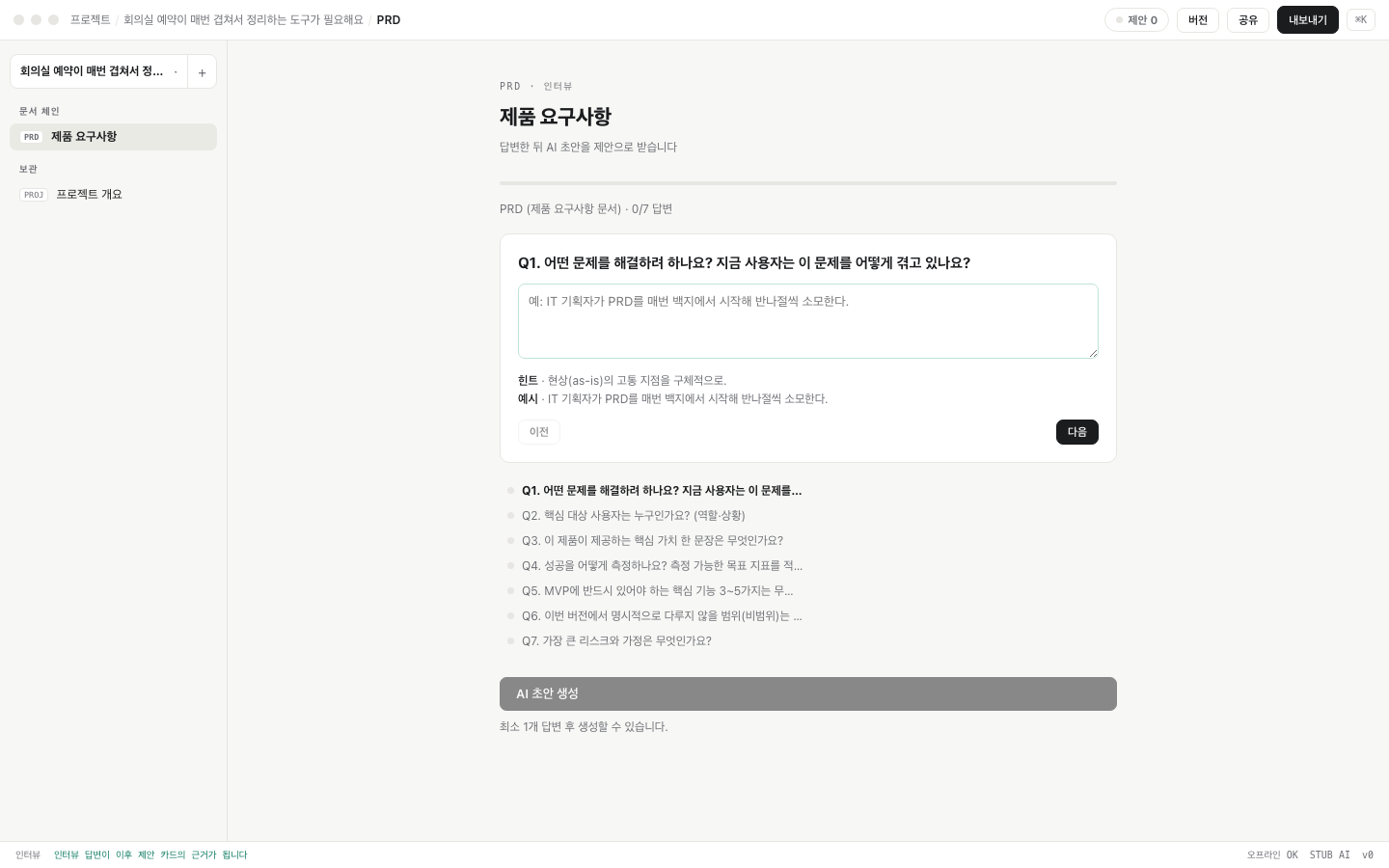
Drafting opens with a single question — "What are we building?" A short interview follows, and your answers become the evidence behind every PRD, feature-spec and IA proposal downstream.
INTThe interview is a document
Your answers are saved as document zero — re-readable, and cited as the source of later proposals.
PRDContext flows down the chain
Feature specs inherit the PRD; IA inherits both. Each document knows which version of its parent it was written against.
STALEUpstream changes re-propose, never overwrite
Change the PRD and affected downstream items return to proposal state. Nothing is silently rewritten.
BYOKYour login, your machine
The desktop app drives your local Claude Code login — no API key. Docker self-host falls back to BYOK keys (AES-256-GCM, plaintext never stored).
Handoff
The chain ends in something you can hand off.
When the accepted chain passes its consistency checks, Drafting compiles a handoff — the spec, ready for an engineer or an AI coding agent to build from.
GATEConsistency, checked
Broken links, features tied to no requirement, screens no flow reaches — caught and resolved in the editor, never shipped silently.
PACKAn agent-ready prompt pack
Hand the accepted spec to a coding agent: role, scope, and every feature with its acceptance criteria as checkboxes.
OUTExport what you accepted
Markdown, print-ready HTML and PDF, and a GitHub-style dev-ticket checklist. Accepted content only.
RUNOn your terms
Your Claude subscription (no key), a BYOK key, or an OpenAI-compatible gateway like LiteLLM for teams.
Quickstart
Self-hosted in a minute.
Your documents live in a local SQLite file — no accounts, no cloud. The desktop app needs no key; the server uses BYOK.
# fastest — run from npm, opens in your browser
# runs in your terminal, so the Claude Code subscription and env-var keys just work
$ npx @hanmariyang/drafting serve
# → http://localhost:8477

# prebuilt server image
$ docker run -p 8477:8080 -v drafting:/data ghcr.io/hanmariyang/drafting:latest

# or from source
$ git clone https://github.com/hanmariyang/drafting && cd drafting && docker compose up -d
Download
Desktop app.
The document workspace as a native window — same self-hosted core inside.
Downloads land on the latest GitHub Release. Prefer a server? Run the prebuilt image and open it in any browser.